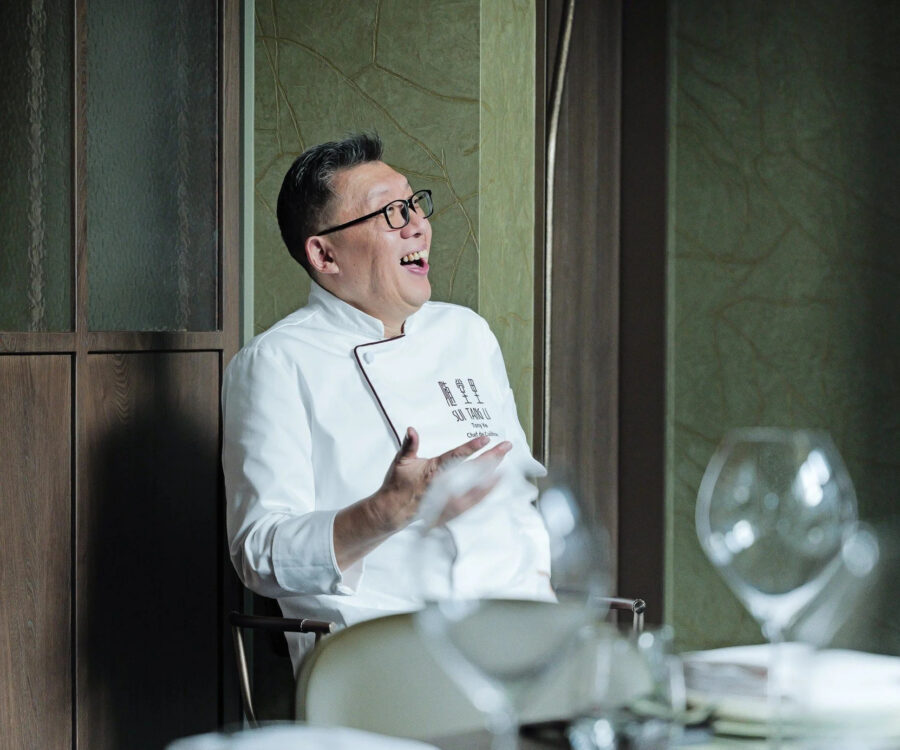
To master something is to devote yourself completely to the details most people never notice.
For Chef Tony Ye, it is the near-translucent thickness of a dumpling wrapper, the rhythm of practised hands, the more-than 32 pleats required to seal a spoonful of broth inside a parcel no bigger than the palm of your hand.
As acclaimed Chef de Cuisine at Sui Tang Li, the restaurant at Upper House Shanghai, he has spent decades in pursuit of perfection, refining the art of the xiaolongbao — guided, he says, by his grandfather’s advice to learn a skill and take it “to the extreme”.
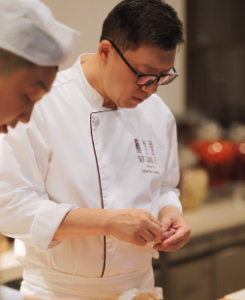
Often described as Shanghai’s culinary calling card, to Tony, the soup dumpling is more than the city’s most famous dish, it is the clearest expression of the city itself: “It perfectly reflects its character. Inclusive, open and all-embracing.”
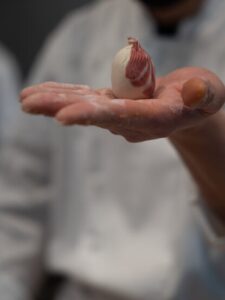
His relationship with xiaolongbao goes back to his formative years. “When I was a child, my family didn’t have much,” he recalls.
“My most unforgettable memory is from my birthday, when my parents took me to Yu Yuan Garden, where there was a stall selling soup dumplings. We queued for freshly steamed ones – they are best eaten hot, straight from the steamer. That moment really moved me.”
At home, he watched his mother make crab dumplings by hand. When both of his parents were working, he would often attempt to recreate them himself. What began as childhood curiosity gradually became something deeper.
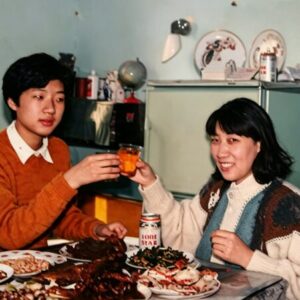
His career began as a dim sum chef, but the fascination took root years earlier. Even today, certain flavours have the power to transport him back. Asked which dish carries the strongest memories of home, he doesn’t hesitate:
“My mother’s sweet and sour ribs.”
The dish was reserved for festivals and family celebrations, becoming inseparable from memories of childhood and time spent together around the table.
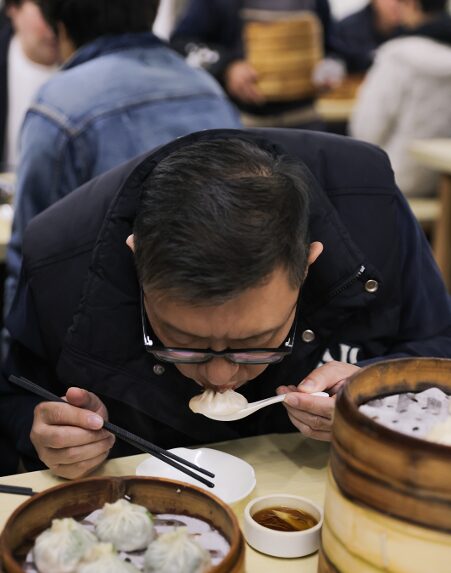
For Tony, food is never simply food. It is memory, family and place woven together. It is a belief that explains much about both his approach to travel and his approach to cooking. Whenever he visits somewhere new, food is his first port of call.
He is always searching for something new: an unfamiliar ingredient, a regional technique or a local speciality that might reveal a different way of thinking about food.
Rather than heading for the most famous restaurants, he prefers to explore local neighbourhoods, seeking out the dishes people eat every day and the ingredients unique to that particular place.
Those discoveries rarely stay where he finds them. Iberico ham, Australian blue lobster, and flavour combinations lifted from China’s regional kitchens have all found their way into his Shanghai repertoire, sitting easily alongside the classics, reflecting the city he grew up in.
“Shanghai has become so international,” he says — and he sees the same instinct at work in the dumpling’s own evolution. For centuries, the city has absorbed outside influences and remade them as its own. The soup dumpling, in his telling, is simply that history rendered edible.
Yet for all its openness to change, Shanghai remains deeply connected to its traditions. Spend a day exploring the city through his eyes and the contrasts quickly reveal themselves. Historic longtang alleyways sit alongside soaring skyscrapers. Family-run restaurants continue recipes perfected over generations while ambitious young chefs reinterpret them for a new era. Tradition and reinvention exist side by side.
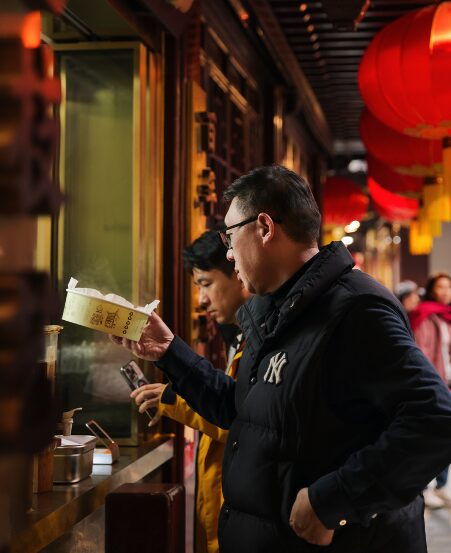
Ask Tony where visitors to his hometown should begin and, unsurprisingly, he recommends starting at the table, at places like A Da’s Scallion Pancake or Lai Lai Soup Dumplings, where the same dish has been made the same way for decades.
“The chefs there are old-timers who have dedicated their whole lives to making one or two dishes,” he says. “They do it exceptionally well, using fresh ingredients that are never left overnight, and they never use pre-prepared or frozen food.”
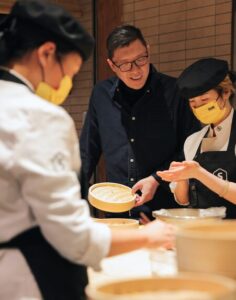
It’s this irrepressible connection between food, culture and people that he extends to guests at Upper House Shanghai, where his House Local sessions begin with a private soup dumpling masterclass but rarely end there. What follows is closer to oral history — the stories behind the dumpling, the traditions it carries, the city that keeps reinventing it. Timing permitting, he’ll take guests out to Yangcheng Lake between October and January, when hairy crabs are in season.
“We can walk by the lake, catch hairy crabs, and then taste crab roe soup dumplings,” he says gleefully.
Other days might lead to Xiemaqiao Ancient Town in Fengxian District, a beautifully preserved, millennium-old water village, or out to Chongming Island, known for its fertile farmland and sweet, golden melons.
Decades into this pursuit, Tony is still refining, still tasting, still folding. What makes him such a compelling guide to Shanghai isn’t simply the expertise — it’s the vantage point that total devotion to one small, exacting dish has earned him. Through it, he offers a version of the city that no guidebook quite reaches.
Every fold, in the end, tells a story: of family, of tradition, and of a city that has spent centuries mastering the art of moving forward without letting go.
Discover Tony Ye’s Shanghai through the House Local programme at Upper House Shanghai, part of The Set.